


Kioxia: 2026 NAND Is “Sold Out” — AI Storage Demand Pushes Tight Supply Toward 2027
Published: 1.28.2026
Key takeaways
- Kioxia says its 2026 NAND flash output is effectively fully committed, with tightness potentially extending into 2027, as AI-led storage demand absorbs supply.
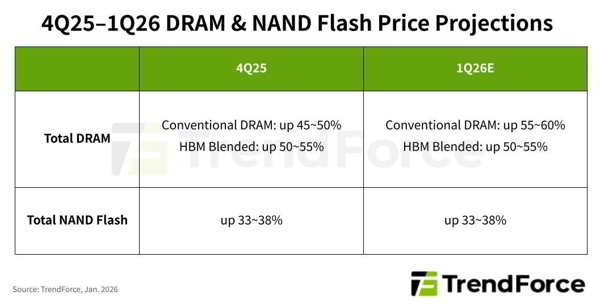
- Memory suppliers are prioritizing server/AI applications, and TrendForce expects NAND contract prices to rise 33–38% QoQ in 1Q26, with client SSD contract pricing up 40%+ QoQ.
- New capacity won’t arrive overnight: Kioxia and Sandisk’s Kitakami Fab2 (K2) began operations in late September 2025, but output is expected to ramp in stages, with meaningful volume starting in 1H 2026.
Memory market dynamics in early 2026 are increasingly shaped by AI-driven storage demand and intentional capacity discipline by suppliers.
Kioxia memory business managing director Shunsuke Nakato has been widely quoted saying Kioxia’s 2026 NAND production is already “sold out,” with tightness likely lasting into 2027.
That’s less about literal shelves going empty and more about capacity being pre-committed: long-term customer planning and contracts absorb most available output, leaving limited “swing supply” for sudden demand spikes. When that happens, the pressure typically shows up as repricing, longer lead times, and stricter allocation behavior.
A step-change in pricing
The near-term price outlook is unusually aggressive for a quarter that would normally be calmer. TrendForce’s latest view is that memory makers are prioritizing server applications and that NAND demand is increasingly polarized between consumer and AI. That setup supports their forecast of NAND +33–38% QoQ in 1Q26 and client SSD +40%+ QoQ.
This allocation pressure is already visible upstream: pricing trackers report NAND wafer contract prices jumped more than 60% in November 2025, with the steepest increases concentrated in TLC products tied to enterprise SSD demand.
Taken together, these moves point to more than a cyclical rebound. They suggest a structural rebalancing of NAND supply toward AI and server workloads, segments characterized by longer planning cycles, higher qualification barriers, and a greater willingness to pay for assured capacity, leaving mainstream and client markets more exposed to price volatility and allocation risk.
TrendForce and related analysts have highlighted that enterprise SSDs are projected to become the largest NAND application segment in 2026, driven by cloud service providers accelerating AI data-center builds.
Kioxia’s corporate outlook also suggests AI-related NAND demand could grow around 20% per year, especially for inference storage and high-capacity enterprise builds,redefining which segments command scarce memory wafer capacity.
Why supply relief may be slow
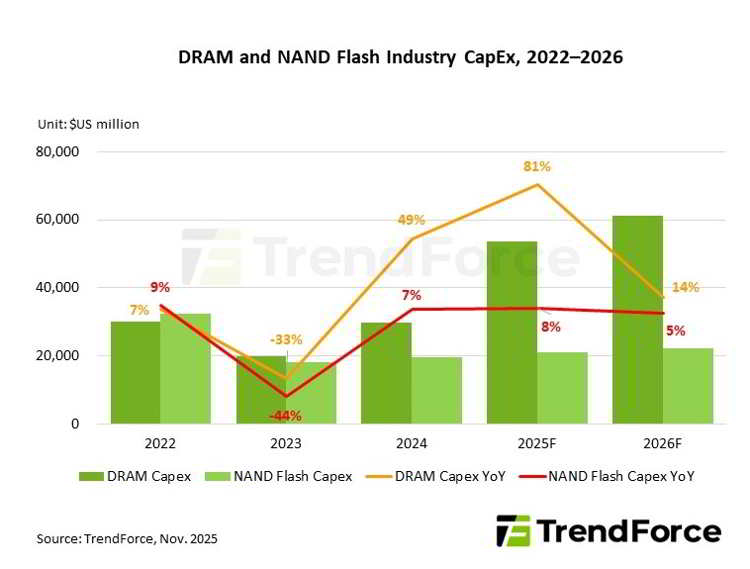
Kioxia and Sandisk are adding capability, but the timeline matters. Their official announcement confirms Kitakami Fab2 (K2) has started operations, and TrendForce reporting around that launch points to a gradual ramp, with meaningful output expected in 1H 2026.
Meanwhile, large greenfield additions are measured in years. Micron’s planned $24B Singapore NAND fab is a major capacity signal, but output is expected to begin in 2H 2028—helpful long-term, but irrelevant for 2026 tightness.
Some analysts are leaning hard into the shortage thesis. A Mizuho analyst note cited in financial press argues supply remains constrained through 2026–2027 and outlines a very bullish pricing scenario. Treat that as one aggressive forecast, but it reinforces the broader “tight supply” narrative the market is trading on.
Implications for channel and end markets
Taken together, these trends suggest the memory market in 2026 will reflect a tight supply and upward price trajectory with several implications:
Pricing drivers will persist
Enterprise-oriented demand, particularly for AI and server SSDs, will continue to absorb wafer capacity before client segments, meaning pricing pressure is likely to remain intense across both contract and spot markets.
Consumer segments may lose discount incentives
With supply priorities shifting upstream and inventories lean, consumer SSDs and mainstream NAND components are less likely to see deep promotions—even if absolute pricing doesn’t match enterprise levels.
OEM/BOM risk requires strategic procurement
Extended lead times and allocation-oriented contracts may force OEMs and module makers to revise procurement strategies. Expect longer lead times, tighter minimum order commitments, and less flexibility around BOM mix changes.
Capacity relief is gradual, not immediate
Ramp-ups like Kioxia’s Kitakami Fab2 and Micron’s long-range expansions will add supply over time, but meaningful wafer output won’t shift the supply/demand imbalance overnight.


