


Samsung and SK Hynix Plan $518 Billion Memory Hub for AI
Published: 6.29.2026

Key Takeaways
- Samsung Electronics and SK hynix plan to invest a combined $518 billion in a new semiconductor manufacturing hub in South Korea.
- The investment occurred as continued demand growth for DRAM, HBM, NAND Flash, and advanced packaging driven by AI infrastructure.
- New capacity is unlikely to materially improve memory availability in 2026 because construction and production ramps will take several years.
Samsung Electronics and SK hynix plan to invest a combined 800 trillion won, or approximately $518 billion, in a new semiconductor manufacturing hub in South Korea’s southwest region, marking one of the industry’s largest long-term memory expansion projects.
The project includes four fabrication plants, with Samsung and SK hynix each planning two facilities. The announcement was made alongside South Korean President Lee Jae Myung as part of a broader initiative to strengthen the country’s semiconductor and AI infrastructure.
Together, Samsung and SK hynix account for roughly two-thirds of global memory production, making their capacity expansion plans closely watched across the DRAM, HBM, NAND Flash, SSD, and advanced packaging supply chain.
AI Demand Continues to Tighten Memory Supply
The announcement comes as AI infrastructure spending continues to drive demand for high-performance memory products, particularly HBM, server DRAM, and enterprise SSDs.
TrendForce forecasts conventional DRAM contract prices to increase 58% to 63% quarter-over-quarter in the second quarter of 2026, while NAND Flash contract prices are projected to rise 70% to 75%. The firm has attributed the increases to strong AI-related demand and continued supplier allocation toward higher-margin memory products.
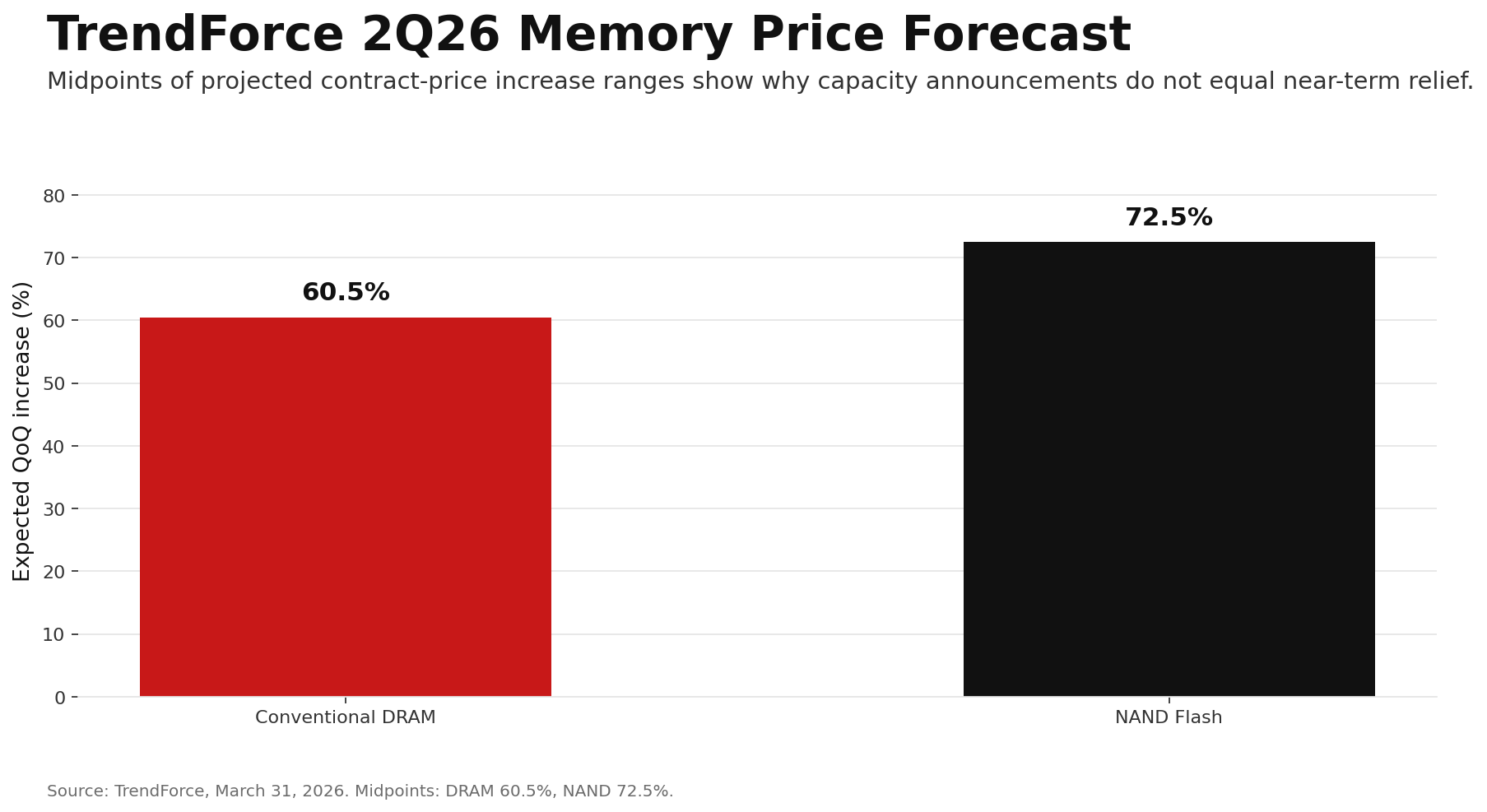
Memory manufacturers have increasingly prioritized HBM, server DRAM, and enterprise SSD production, reducing available capacity for some mature memory categories. As a result, buyers of DDR4, DDR3, DDR2, embedded memory, eMMC, UFS, and industrial storage products continue to face tighter supply conditions.
HBM Remains a Key Industry Bottleneck
HBM has emerged as one of the most capacity-constrained segments of the semiconductor market due to its critical role in AI accelerators and data-center infrastructure.
According to Counterpoint Research, SK hynix held 58% of global HBM revenue in the first quarter of 2026, while Samsung and Micron each held 21%.
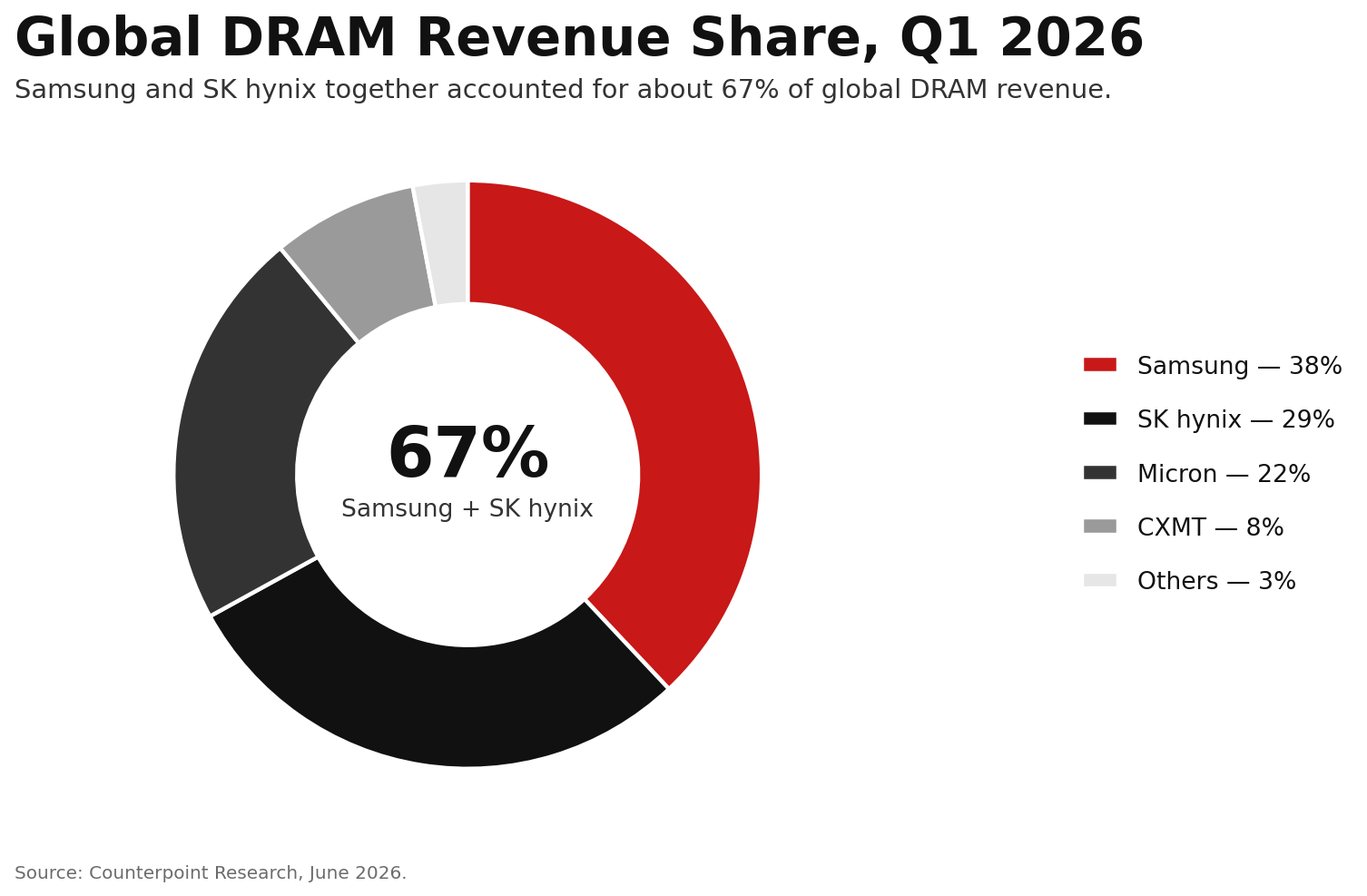
Because HBM production requires advanced DRAM manufacturing, packaging, testing, and substrate capacity, investment decisions by leading memory suppliers increasingly influence a broader ecosystem that includes packaging providers, materials suppliers, equipment manufacturers, and test-service companies.
Why Supply Relief Will Take Time
While the planned investment highlights confidence in long-term AI demand, it is unlikely to ease near-term market tightness.
Samsung and SK hynix have not disclosed completion dates for the new facilities. Industry experience suggests major semiconductor manufacturing projects require several years for site development, construction, equipment installation, process qualification, and volume production.
SK Group Chairman Chey Tae-won noted that the company’s existing semiconductor cluster in Gyeonggi Province took approximately nine years to establish. Separately, SK hynix’s first fab at the Yongin Semiconductor Cluster is scheduled to open its cleanroom in early 2027 despite accelerated construction efforts.
The current pricing and allocation pressures are likely to persist well before meaningful new capacity enters production.
Market Impact
The investment reinforces several trends already shaping semiconductor procurement strategies:
- Continued prioritization of HBM, server DRAM, and enterprise SSD production.
- Ongoing pressure on mature DRAM generations and legacy memory products.
- Increased demand for advanced packaging, substrates, testing, and semiconductor materials.
- Long-term capacity expansion focused on AI infrastructure rather than immediate supply relief.
Organizations with exposure to DRAM, NAND Flash, SSDs, embedded memory, and legacy memory products should continue monitoring allocation risks, pricing trends, and supplier roadmap changes.
Industrial, medical, aerospace, telecom, and energy applications may face additional challenges because redesigns and qualification cycles often limit substitution options.
IBS Electronics supports OEMs, EMS providers, and industrial manufacturers with BOM analysis, lifecycle monitoring, sourcing support, and identification of approved alternate components to help mitigate memory supply risks.
Need support evaluating DRAM, NAND, SSD, or legacy memory availability? Contact IBS Electronics to identify potential supply-chain risks before allocation impacts production schedules.


